

Effective date: 1 December 2026
Adopted: 23 September 2026
Issue: Family education, assimilation, and international human rights law
Ablet Turdi and Erk Altay
Summary
The Xinjiang Uyghur Autonomous Region Family Education Promotion Regulation which takes effect on December 1, 2026, contains provisions that are inconsistent with China’s international obligations under the Convention on the Rights of Child, International Covenant on Economic, Social and Cultural Rights, and International Convention on the Elimination of All Forms of Racial Discrimination. China is a party to all three treaties.
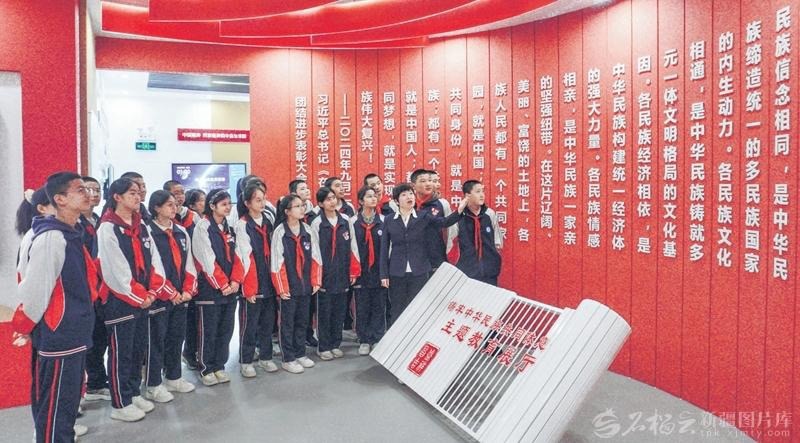
The regulation extends state regulation into the upbringing of children and the transmission of identity within the family. It requires family education to promote identification with the Chinese nation, Chinese culture, the Chinese Communist Party (CCP), and socialism; requires children to learn and use Mandarin Chinese; mandates atheist and anti-separatist education; promotes interethnic “interaction, exchange and integration”; and restricts the religious education and participation of minors. These obligations are supported by an institutional system involving schools, neighborhood and village committees, resident work teams, public security organs, procuratorates, and courts.
The regulation contains legitimate child protection measures, including provisions addressing sexual abuse, domestic violence, disadvantaged children, and online safety. The principal human rights concerns arise from provisions governing religion, language, cultural identity, and ideological formation. In the context of longstanding restrictions on Uyghur linguistic, cultural, and religious life, these provisions can be understood as further juridifying assimilation by making the intergenerational transmission of identity an object of state regulation. UN experts have previously raised concerns that restrictions on Uyghur language education and cultural and religious transmission may contribute to forced assimilation.
Key concerning provisions
National and political identity (Articles 1, 3, and 4). Article 1 of the regional family education promotion regulation makes “forging a strong sense of the Chinese national community” an express purpose of family education. Article 3 requires family education to strengthen identification with the “great motherland,” Chinese nation, Chinese culture, CCP, and socialism with Chinese characteristics. Article 4 places family education under CCP leadership.
These provisions go beyond China’s national Family Education Promotion Law. The national law already promotes socialist values, CCP loyalty, national unity, and Chinese national community consciousness, but the regional regulation adds region-specific requirements concerning Mandarin Chinese, atheist education, anti-separatism, interethnic integration, and children’s religious participation.
Language, religion, and assimilation (Article 20). The regulation’s most consequential provision states that families, schools, and society must jointly educate children to love the CCP, state, people, and Chinese nation; learn and use the “national common language and script”; uphold national and ethnic unity; forge Chinese national community consciousness; promote interethnic “interaction, exchange and integration”; and receive atheist and anti-separatist education. It further prohibits any organization or individual from “organizing, inducing, coercing or forcing” minors to believe in religion or participate in religious activities.
Implementation and enforcement (Articles 18 and 24-30). Family education is incorporated into township and neighborhood governance, village and residents’ committees, and resident work teams. Police, procuratorates, and courts may provide or order family education guidance in specified cases, with decisions communicated to schools and grassroots organizations and followed by monitoring. Article 30 permits criticism and compulsory guidance where parents fail to fulfil family education responsibilities and expressly provides for legal liability where parents “organize, induce, coerce or force” minors to believe in religion or participate in religious activities, including under the region’s De-extremification Regulation (enacted in 2017 and amended in 2018).
International human rights assessment
China is bound by the Convention on the Rights of the Child (CRC), ratified in 1992; International Covenant on Economic, Social and Cultural Rights (ICESCR), ratified in 2001; and the International Convention on the Elimination of All Forms of Racial Discrimination (CERD), to which it acceded in 1981.
Freedom of religion and parental religious upbringing
Articles 20 and 30 of the XUAR Family Education Promotion Regulation present the clearest violation of China’s treaty obligations under the CRC.CRC Article 14 protects the child’s freedom of thought, conscience, and religion and requires states to respect parents’ role in guiding children in exercising those rights according to the evolving capacities of the child. Article 30 of the CRC separately protects minority children’s right to practice their religion in community with other members of their group.
ICESCR Article 13(3) requires states to respect parents’ freedom to ensure the religious and moral education of their children in conformity with their own convictions. CERD Article 5 requires equal enjoyment of freedom of thought, conscience, and religion without discrimination based on national or ethnic origin.
The XUAR Family Education Promotion Regulation’s Article 20 prohibits “organizing” or “inducing” minors to believe in religion or participate in religious activities. If those terms are applied to ordinary family religious upbringing, such as teaching the child about a particular faith and facilitating religious observance, the restriction would be difficult to reconcile with CRC Article 14 and ICESCR Article 13(3).
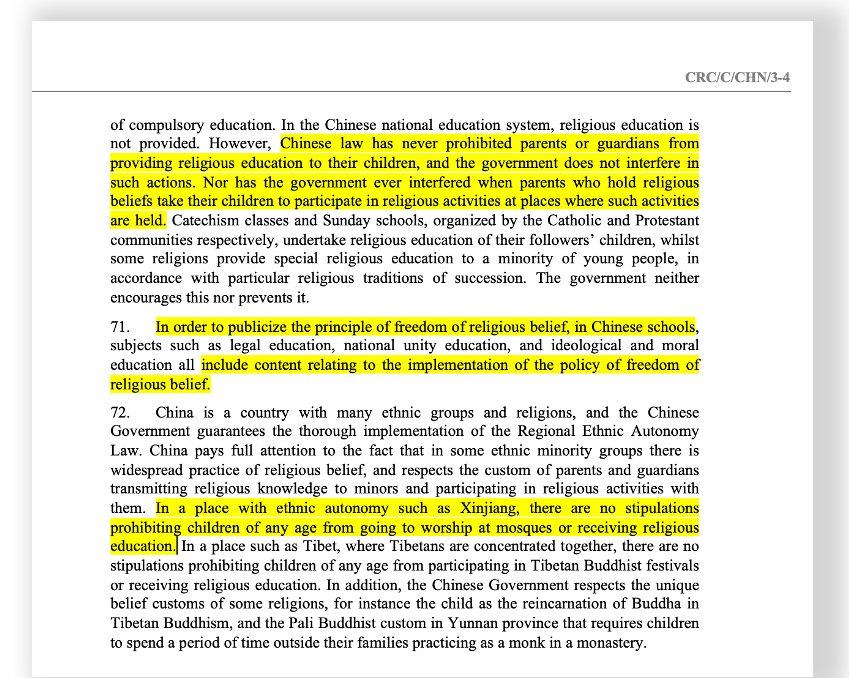
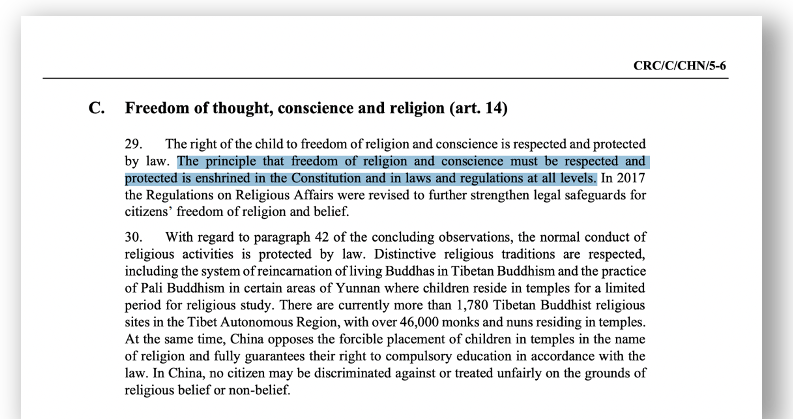
This also represents a notable shift from China’s previous position before UN treaty bodies. China stated in an earlier report that Chinese law did not prohibit parents from providing religious education to their children or taking them to religious activities and that the government did not interfere with such practices. The UN Committee on the Rights of the Child has provisionally scheduled its formal review of China during its session from May 10 to 28, 2027.
Compulsory atheist education
Article 20 of the regional family education promotion regulation combines mandatory atheist education with restrictions on children’s participation in religion. In the Uyghur context, this creates an asymmetrical system in which the state affirmatively facilitates non-religious ideological formation while restricting the transmission of Islam within families. Implemented coercively, this would conflict with the child’s freedom of thought, conscience, and religion under CRC Article 14.
Uyghur language and cultural identity
Article 20 of the XUAR Family Education Promotion Regulation calls on families, schools, and society to work together to “learn and use the common language and writing of the country.” The regulation makes no mention of education in or promotion of Uyghur or “minority languages.”
CRC Article 29 requires education to develop respect for the child’s own cultural identity, language, and values, while Article 30 protects minority children’s right to use their own language and enjoy their culture. ICESCR Article 15 protects participation in cultural life, which the Committee on Economic, Social and Cultural Rights has interpreted to include cultural identity, linguistic expression, and the freedom to choose one’s cultural identity.
UN experts have already raised concerns that Mandarin dominant education and restrictions on Uyghur language transmission may weaken children’s connections with Uyghur language and culture and contribute to forced assimilation.
National community consciousness and assimilation
The XUAR Family Education Promotion Regulation requires families to transmit a prescribed Chinese national and political identity, Standard Chinese, atheist education, and interethnic integration while restricting the transmission of minority religious identity. It contains no comparable protection for the transmission of Uyghur language, Islamic belief, or distinct Uyghur cultural identity.
ICESCR Article 15 is particularly relevant. The Committee on Economic, Social and Cultural Rights has interpreted the right to cultural life as encompassing the ability to choose and express one’s cultural identity and has stated that individuals must not be subjected to forced assimilation.
Conclusion
The XUAR Family Education Promotion Regulation should be understood as part of a wider legal architecture governing identity formation in the region. Its most serious human rights problem is Article 20, reinforced by Article 30, because the prohibition on organizing or inducing children’s religious belief or participation potentially reaches ordinary, non-coercive religious upbringing protected by the CRC and ICESCR.
The language and national community provisions require a more contextual assessment. Promoting Mandarin or a shared civic identity is not inherently unlawful. They become incompatible with international human rights obligations where their purpose or effect is to suppress Uyghur language, religion, or cultural identity or to compel assimilation.
The broader significance of the regulation is its juridification of intergenerational identity formation: language, faith, cultural identification, and political loyalty within the family are increasingly brought within a coordinated system of state prescription, supervision, and, in some circumstances, sanction.
The OHCHR, relevant UN treaty bodies, and the wider international community should publicly raise concerns about the regulation with the Chinese government and scrutinize its implementation. The Committee on the Rights of the Child should address the regulation in China’s upcoming review, while other relevant treaty bodies should examine its compatibility with China’s obligations on freedom of religion, minority rights, cultural identity, and non-discrimination.
