

On March 12, 2026, the Chinese Communist Party passed the Law on the Promotion of Ethnic Unity and Progress. It entered into force on July 1, 2026. The law provides a comprehensive legal framework for Beijing’s efforts to forge a single Zhonghua national identity promoting Mandarin, strengthening ideological education, and assimilating non-Han people like Uyghurs, Tibetans and Mongols into a unified political and cultural order. This new law transforms decades of existing practice into permanent legal and institutional framework.
A central piece of the new law is an assimilationist approach to languages of non-Han nationalities, which is evident in East Turkestan. Over years, Chinese authorities have systematically replaced Uyghur language education with Mandarin instruction, expanding colonial boarding school systems that separate children from families and communities, and reshaped education into a vehicle for linguistic, cultural, and political assimilation.
This brief examines two central pillars of that process. First, it traces the gradual elimination of Uyghur language instruction, demonstrating how Mandarin displaced the mother tongue at every level of education over several decades. Second, it examines the expansion of colonial boarding schools, demonstrating that language policy alone was unable to achieve assimilation without simultaneously disrupting the family and community environment in which language, religion, and culture are transmitted.
The Ethnic Unity Law therefore represents more than a new piece of legislation. It marks the legal consolidation of an assimilationist strategy that has already reshaped the education and social landscape of East Turkestan and provides a national legal framework for its continuation in regions like East Turkestan and Tibet.
Replacing Uyghur with Mandarin
Language has long occupied a central place in the CCP’s approach to ethnic governance. Although the CCP formally recognized minority language rights, most notably in the 1984 Law on Regional National Autonomy, it has increasingly viewed Mandarin as the primary vehicle for national integration. Therefore, the new Ethnic Unity Law marks a new milestone where the central government has effectively eliminated the statutory guarantee of language rights of Uyghurs. However, in East Turkestan, linguistic assimilation has been in progress for several decades already. Since the late 1990s, Xinjiang authorities gradually and systematically replaced Uyghur with Mandarin as the language of instruction, through a step-by-step process that began with so-called “bilingual education” in higher education before extending the policy downward toward secondary schools, primary schools, kindergartens and ultimately preschool. What emerged was the gradual elimination of Uyghur language education.
This transformation stands in sharp contrast to the region’s original legal framework. Both the Common Program of 1949 and PRC’s first Constitution (1954) protected minority languages: the Common Program granted all nationalities the freedom to develop their spoken and written languages, while the 1954 Constitution guaranteed the “freedom to use and develop their own spoken and written language.” When the CCP established the Xinjiang Uyghur Autonomous Region (XUAR) in 1955, Uyghur and Mandarin became its statutory languages, and the region’s 1956 Organic Regulations required state organs to operate in both languages. However, these guarantees steadily gave way to policies that prioritized Mandarin as the common language of education and public life.
The shift began at the top of the education system. In 1959, Xinjiang authorities required all non-Han students at universities and junior colleges to complete a full preparatory year of Chinese before beginning their specialized studies. Following China’s Reform and Opening-up (改革开放) in 1978, non-Han students bound for universities in inner China similarly completed remedial Mandarin programs before starting their degrees. Higher education thus became the first state at which Mandarin shifted from being an additional subject to becoming the primary language of academic instruction.
Authorities then extended the same model into secondary education. A 1960 regional education directive made Mandarin a principal subject in secondary schools in non-Han communities and established the goal that students should be able to attend class and take notes entirely in Chinese by graduation. Beginning in 1962, the region piloted intensive Chinese classes at the junior-secondary level and a Chinese-medium instruction at the senior level. Two years later, on the proposal of regional chairman Seypidin Azizi, authorities formally established experimental Chinese classes at Xinjiang University Affiliated Middle School, Bortala No. 2 Middle School, Ili No. 6 Middle School and Kashgar No. 2 Middle School. These programs extended schooling by an additional year while delivering the entire senior-secondary curriculum in Mandarin. Although the Cultural Revolution interrupted the experiment, the model returned in 1992 with bilingual experimental classes in Urumchi, Karamay, and Turpan. By 2007, the program had expanded to 5247 classes with approximately 164,000 students participating across the region.
Primary education held out the longest. The 1951 national report on minority education required schools serving ethnic groups with their own scripts, including Uyghur, to teach all subjects in their mother tongue. Chinese did not enter the primary curriculum at all until June 1959, when Xinjiang authorities first added Chinese classes, and even then, only from the fourth grade. The decisive shift came in the early 2000s. On July 7, 2002, the State Council’s Decision on Deepening Reform and Accelerating the Development of Minority Education called for schools to “vigorously promote bilingual teaching” by introducing Mandarin from the first year of primary school.
Xinjiang authorities implementation measures followed on March 31, 2004, making the policy objective explicit: non-Han schools were to move from teaching some subjects in Chinese to teaching the entire curriculum in Chinese, while Uyghur was reduced to a single language course. That same year, authorities trained a new generation of so-called bilingual teachers and extended Mandarin instruction into preschool. Human Rights Watch concluded that within only a few years, mother-tongue instruction had largely been eliminated throughout East Turkestan. In doing so, the region became the earliest and most aggressive model for policies later introduced in Tibet and Inner Mongolia.
Implementation accelerated rapidly over the following decade. In 2008 only about one in four non-Han students, roughly 600,000 children, were enrolled in Mandarin instruction classes. By 2012, that figure climbed to approximately 1.68 million students, or nearly two-thirds of all children in the non-Han-language school system. Preschool expanded just as quickly. By 2014, nearly 90 percent of non-Han toddlers were enrolled two-year Chinese-language kindergartens, while the proportion of sixth-grade students studying primarily in Mandarin increased from one-fifths in 2010 to roughly one-half in 2014.
The most aggressive stage came after 2017, amid a genocide in East Turkestan, when authorities shifted an additional one million students into Mandarin instruction in a single year, increasing coverage from roughly one-third to more than four-fifths of all students in a single year. By the autumn of 2018, regional education officials declared the transition complete: all 2.94 million students enrolled in compulsory education were being taught entirely in Chinese. What authorities continued to describe as “bilingual education” had become, in practice, monolingual education in Chinese, with Uyghur retained, at most, as a separate language subject rather than the language which children learned literature, science, mathematics, and history.
The progression of China’s assimilationist language policies reveals a deliberate and highly systematic strategy. Rather than abolishing Uyghur language education outright, authorities advanced one educational level at a time until Mandarin became the language of instruction from preschool to university. The objective was not to ensure proficiency in the national language, but to make Mandarin the principal medium through which future generations of Uyghurs and other minoritized peoples think, learn, and participate in public life.
Raising a Generation Apart
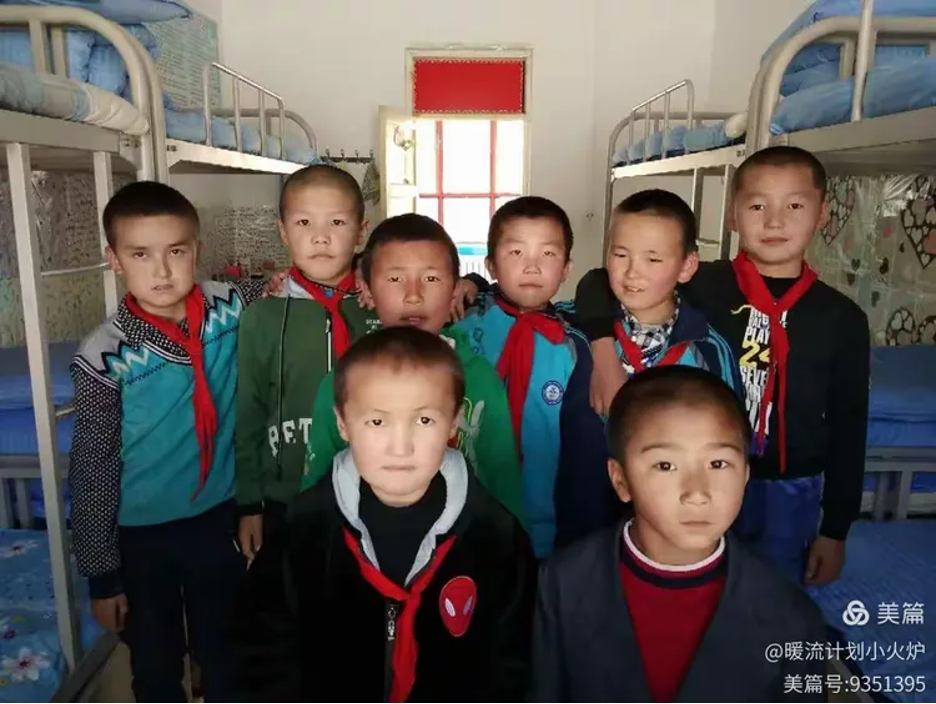
Replacing Uyghur with Mandarin in the classroom addressed only a part of Beijing’s assimilation project. When the mother tongue is erased from the classrooms, families remain the primary institutions through which children acquire their mother tongue, religious beliefs, cultural traditions, and sense of belonging. Beijing is closing the door too not by further reforming the curriculum, but by reconstructing Uyghur childhood through the rapid expansion of colonial boarding schools.
When the mother tongue disappears from classrooms, the home becomes the last place where children still hear it spoken. Families remain the primary institutions through which children acquire their language, religious beliefs, cultural traditions, and a sense of belonging. Language assimilation therefore cannot succeed through schools alone. As long as children return home each day to Uyghur-speaking parents, grandparents, and communities, the family continues to reproduce the very identity the state seeks to reshape. Beijing increasingly addressed this challenge by expanding colonial boarding schools that separate children from their families for much of the year.
In China, compulsory education (义务教育) ordinarily refers to the nine years of schooling required by national law. In East Turkestan, Xinjiang authorities have extended public education to fifteen years, from preschool through senior secondary school. At the same time, they accelerated a policy of “closing and consolidating schools” (撤点并校), eliminating small village schools and concentrating students in larger boarding campuses located in townships and counties. Authorities present this model as means of improving educational quality and expanding opportunities for children in remote, rural communities. Government statements emphasize modern facilities, free meals, and transportation. Some of these material benefits are genuine. But the policy also fundamentally restructures the environment in which children grow up.
As village schools disappear, colonial boarding schools have become less a matter of parental choice than a consequence of educational planning. A 2019 regional standard directs that children in grades one through three are generally not supposed to board. They are expected to attend day schools within roughly thirty minutes of home. Boarding is permitted only from grade four. In practice, this distinction increasingly becomes meaningless once village and neighborhood schools are closed. For example, the 2025 enrollment notice for Tashkorghan county illustrates the policy’s effect: 307 fourth-grade students attending seven township schools were assigned directly to the county’s boarding primary school. Likewise, in 2025, Kizilsu Prefecture reported closing 49 “small, weak, and scattered” rural schools and kindergartens while simultaneously adding thousands of new dormitory beds.
The expansion of boarding schools should therefore be understood as an extension of language policy rather than a separate educational reform. Removing Uyghur as the language of instruction changes what children learn during the day. Removing children from their homes changes what they experience after school. Together, these policies dramatically reduce daily exposure to Uyghur-speaking parents, neighbors, religious practice, oral traditions, and community life.
The scale of the transformation is significant. In Niya County, where Uyghurs constitute the overwhelming majority, approximately a quarter of primary school students and more than half of junior secondary school students now attend boarding schools. In neighboring Guma County, more than 27,000 students live in colonial boarding schools, including over 12,000 primary school children. Researchers estimated that roughly 90 percent of children in one southern county in East Turkestan were boarding. What began as an educational policy for remote communities has evolved into the dominant model for schooling across much of the south of East Turkestan.
Nor is the model entirely new. In 2000, Beijing launched the “Xinjiang Class,” project, transferring high performing students, mainly from the southern prefectures of East Turkestan, to senior secondary schools in China’s interior. A junior secondary program followed in 2024. Students studied entirely in Mandarin, religious practice was prohibited, and many children returned home only once a year. Initially designed for a relatively small number of elite students, the model has gradually expanded into a regional system that now shaped the educational experience of hundreds of thousands of Uyghur children in East Turkestan.
Chinese state media present the colonial boarding schools through narratives of opportunity and mobility: “a Kyrgyz child leaving a remote “horseback primary school” in the Pamirs for a modern county boarding school,” “a student from the mountains dreaming of university in inner China,” or “a dormitory replacing long journeys over difficult terrain.” Geographic isolation and rural poverty are real, and many children benefit from improved education facilities, free meals and expanded opportunities. But they are only part of the story.
The system also boards children whose parents have been detained or imprisoned by authorities during China’s mass detention campaign targeting Uyghurs and other Turkic groups in the region. At one “Loving Heart” boarding school in Qaraqash County, most of the more than 450 students reportedly no longer had parents at home. The youngest were seven, and some could not say how long it had been since they had last seen their mother or father. In these cases, the state presents boarding schools as protection from hardship that its own detention policies helped create.
The consequences extend well beyond physical separation. Uyghur linguist Abduweli Ayup has described children returning from different schools speaking different varieties of Mandarin while struggling to communicate with one another in Uyghur. A day student still returns each evening to Uyghur speaking parents, grandparents, neighbors, prayers, stories, songs and community life. A boarding student separated from that environment for weeks, months, or even an academic eyar does not. In 2023, three UN special rapporteurs warned that widespread separation of Uyghur and other non-Han children from their families could facilitate forced assimilation into Mandarin language and Han cultural practices.
Taken together, Mandarin-only educational and the expansion of boarding schools operate as mutually reinforcing pillars of Beijing’s assimilation strategy. One reshapes the language through which children are educated, and the other weakens the family and community environment in which language, religion, and culture are transmitted. A generation educated in Mandarin and raised increasingly apart from its families and communities is also a generation growing further removed from the people who would otherwise have taught it how to be Uyghur.
Conclusion
The significance of the Law on the Promotion of Ethnic Unity and Progress lies not in what it creates, but what it legalizes. It transforms decades of assimilationist practices in East Turkestan into a national law, making permanent a model of ethnic governance first developed through administrative policy and local experimentation.
As Beijing expands the model beyond East Turkestan and Tibet, the law should be understood as the legal instrumentalization of a broader system of ethnic assimilation. Its implementation and expansion to other minoritized regions must be met with greater and sustained international criticism.
The law’s reach does not stop at China’s borders. Article 63 states that “organizations and individuals outside of mainland China” who “undermine ethnic unity and progress or create ethnic division” are to be pursued for legal responsibility. In effect, the provision criminalizes diaspora advocacy. Amnesty International warns that Beijing could use it to justify transnational repression, since peaceful advocacy for minority rights” by anyone, anywhere” could be read as undermining ethnic unity. Beijing has dismissed these concerns and calls Article 63 a “legitimate, lawful, necessary, and workable legal provision.” Taiwan, for its part, has cautioned its citizens about travel to China now that the law is in force.
