
Policy Architecture of the Uyghur Genocide
Executive Summary
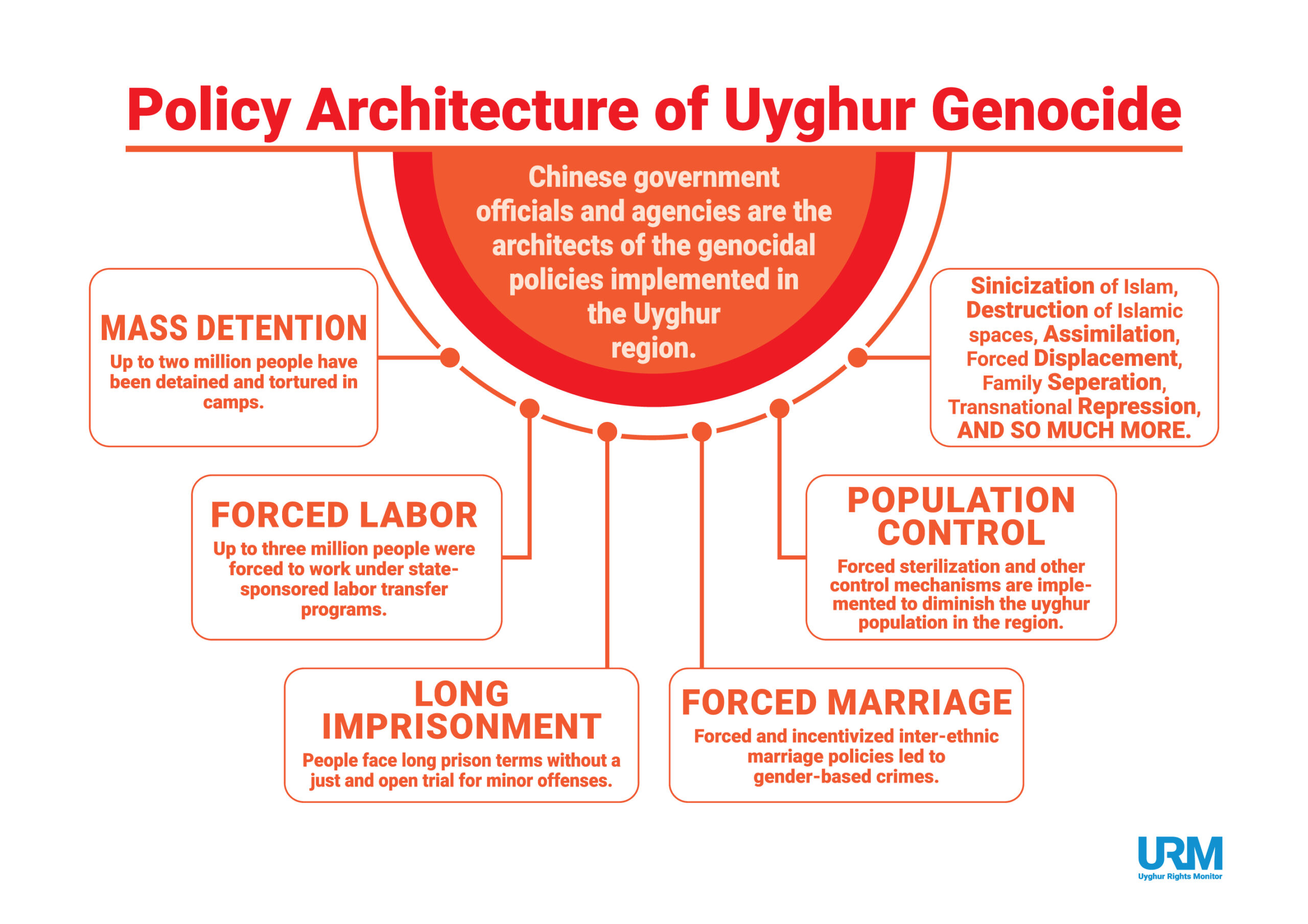
Most Uyghurs live in a region officially called Xinjiang Uyghur Autonomous Region, which is referred to as East Turkestan by Uyghurs and other Turkic people. The Uyghur region has been subjected to China’s most oppressive policies, which have escalated dramatically since 2016, into genocide and crimes against humanity. The policies that perpetuate the genocide include, but are not limited to, arbitrary mass detention and imprisonment, forced labor, forced sterilization, family separation, cultural assimilation, deliberate cultural destruction, and transnational repression against Uyghurs and other Turkic groups abroad. The repression in the Uyghur region has transformed into a sophisticated set of policies aiming to eradicate the identity, culture, religious beliefs, and heritage of the people living in the region.

[…] The Chinese government launched the “Strike Hard Campaign Against Violent Terrorism” in East Turkestan in May 2014. Earlier Strike Hard campaigns in the 1990s and 2000s had already targeted Uyghur religious expression, but the crackdown entered a new phase after Chen Quanguo became the regional Party Secretary in August 2016, bringing with him a security model developed during his tenure in Tibet. Under Chen, authorities rapidly expanded mass surveillance and arbitrary detention while intensifying birth suppression, forced labor, and restrictions on religious and cultural life. These policies formed the architecture of what has been recognized as genocide. […]